
Static Load Transfer in Heavy-Duty Concrete Floors
Your load transfer calculation? Check your project in our engineering designer tool:


Everything needs to be as efficient as possible
Logistics have developed drastically over the last decade: loads became higher, racks taller, and forklifts faster. Have construction materials adapted to these higher demands?
Do construction joints fulfil the requirements of load transfer and limitation of deformation?
Key Challenge: When heavy racking uprights sit directly along or near a joint, the joint must transfer up to 50% of that static load to the adjacent slab to prevent differential deflection and sub-base failure.
What is static (racks) load transfer?
Understanding the three primary static loading scenarios across industrial concrete floor slabs:
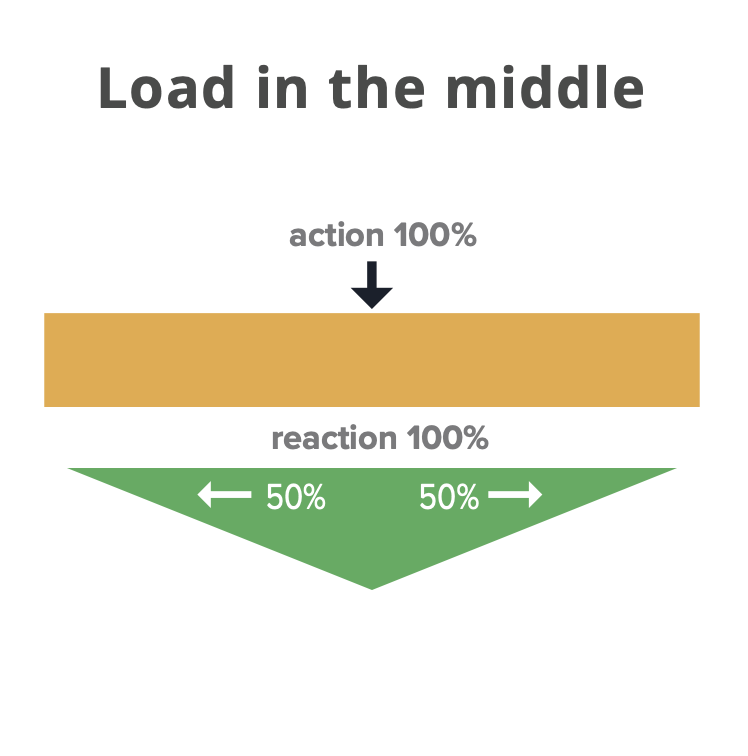
Load in the Middle
Symmetric 50% / 50% reaction distribution across the continuous slab without joint breaks. Ideal uniform sub-base pressure.
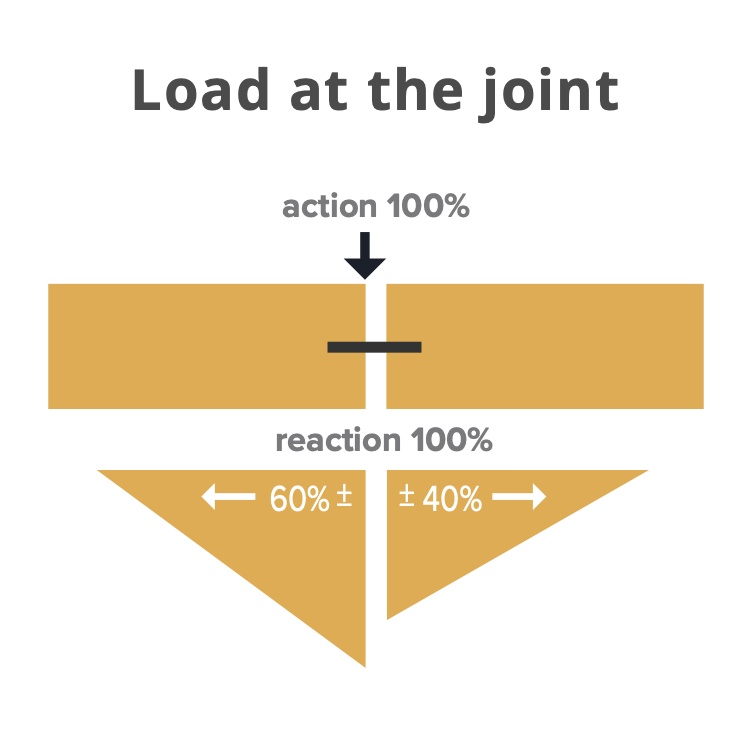
Load at the Joint
Point load at the joint requires structural shear transfer. The joint mechanism must transfer load smoothly to the adjacent slab.
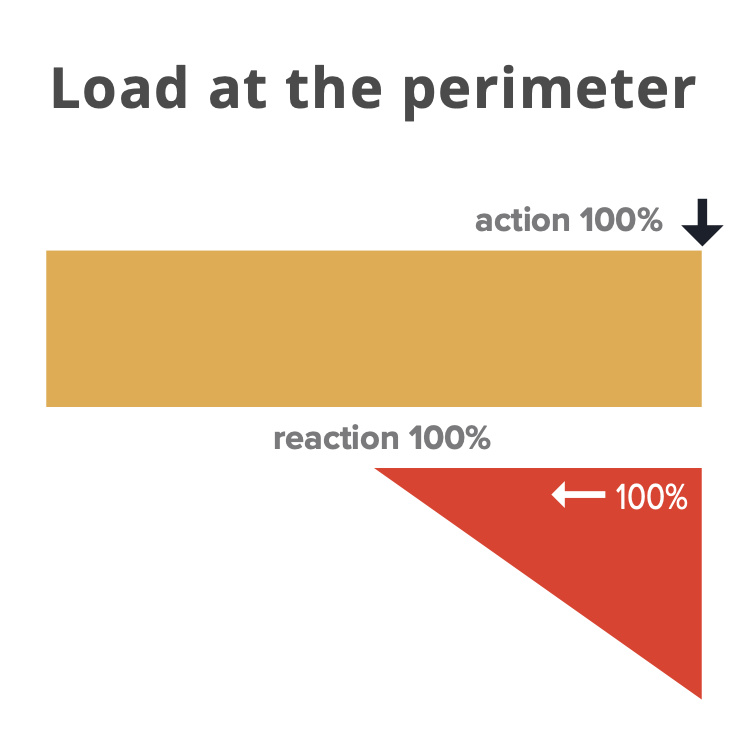
Load at the Perimeter
100% reaction concentrated on a single unsupported slab edge. High bending stress, slab curling, and severe cracking risk.
Generally, the most critical static loads come from racks (back-to-back racking). A high-performing construction joint is far more than a fancy waveform: for static loads, everything that matters is transferring loads while limiting deformations!
Why is good load transfer so important?
Comparing unbalanced vs. balanced reaction distribution under static warehouse racking:
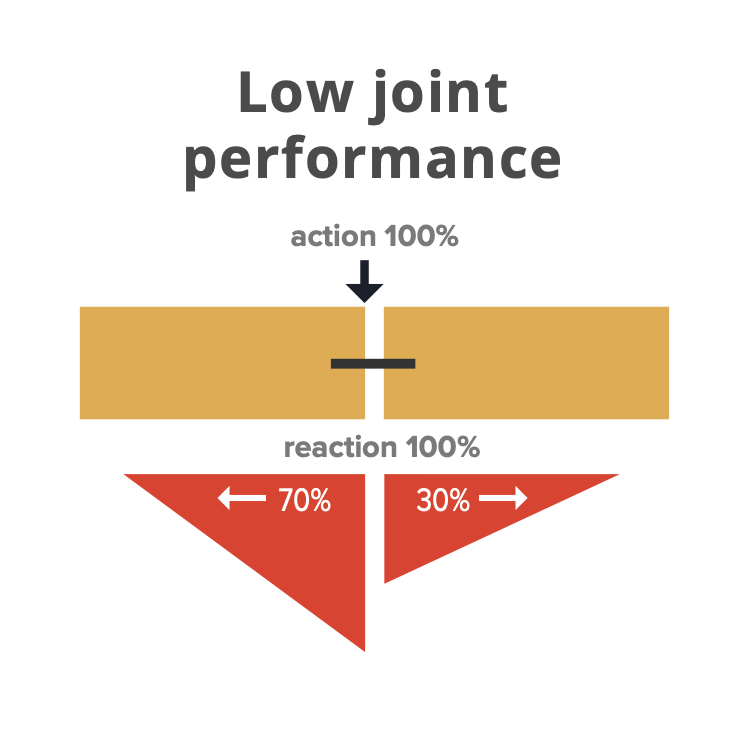
Low Joint Performance
- Excessive differential vertical deflection between slabs
- Concrete edge crushing, spalling, and longitudinal cracks
- High sub-base overstress and localized settlement voids
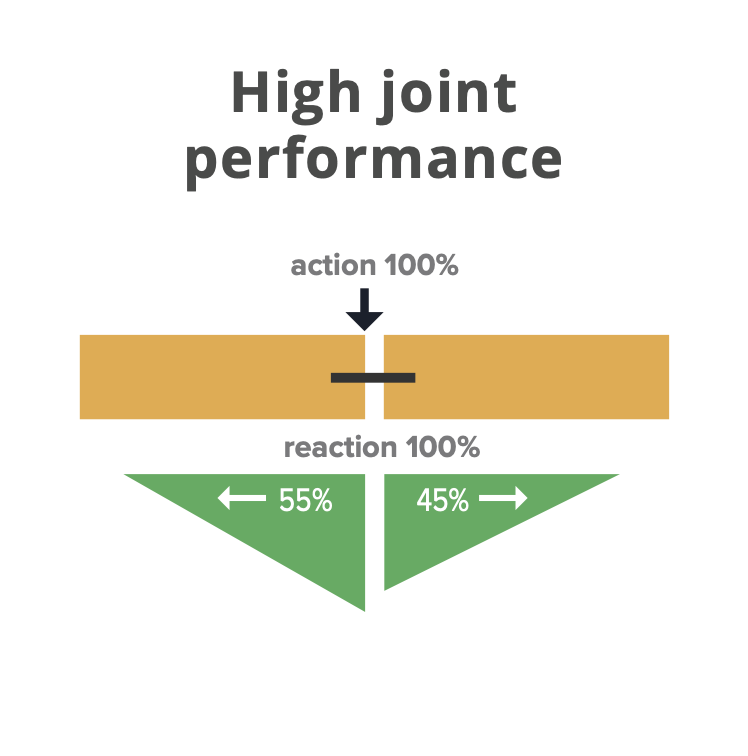
High Joint Performance
- Continuous, uniform load sharing across the opened joint
- Near-zero differential deflection & preserved rack plumbness
- Uniform sub-grade reaction preventing foundation fatigue
“The construction joint is an integral part of your industrial floor. Only if these joints work efficiently, your whole floor can be efficient.”
Different products have different performances
Different joints have vastly different load transfer capacities. Watch how different joint profiles perform under actual load and wheel passings:
As concrete shrinks and joints open (10–25 mm), traditional isolated dowels lose contact stiffness, causing heavy differential deflection. Cosinus Slide® continuous 3D interlocking ensures unbroken load transfer across the full joint width.
× Traditional Dowels & Flat Plates
- Discontinuous 300–600mm spacing: Uncut point loads leave inter-dowel zones unsupported.
- Efficiency drop on opening: Transfer drops below 20% at 15–20mm joint opening.
- Differential settlement: Unequal depression causes rack misalignment and edge punch-through.
✓ Cosinus Slide® Continuous 3D System
- 100% Continuous support line: Load distributed uninterruptedly along entire joint length.
- Double slide mechanism: Maintains continuous vertical load transfer up to 30mm opening.
- Zero differential deflection: Keeps racking uprights plumb and fully protects the sub-base.

Does this matter to me?
What do you guess the percentage of correctly designed industrial floors is?
We estimate 70% of industrial floors are UNDER-DESIGNED and load transfer is not properly addressed.
Most industrial floor designs simply assume a fixed theoretical rate of load transfer at the joint without calculating stiffness loss as shrinkage opens the gap.
Need a Complete Design Check?
We are happy to provide you with a full structural design check. Contact our specialist engineering team today to optimize your floor joints for heavy static racking.