History & Evolution
To understand the technology behind the necessity for joints in an industrial floor, it is essential to have an overview of the history and evolution that has taken place.

History & Evolution
To understand the technology behind the necessity for joints in an industrial floor, it is essential to have an overview of the history and evolution that has taken place.
Before 1980
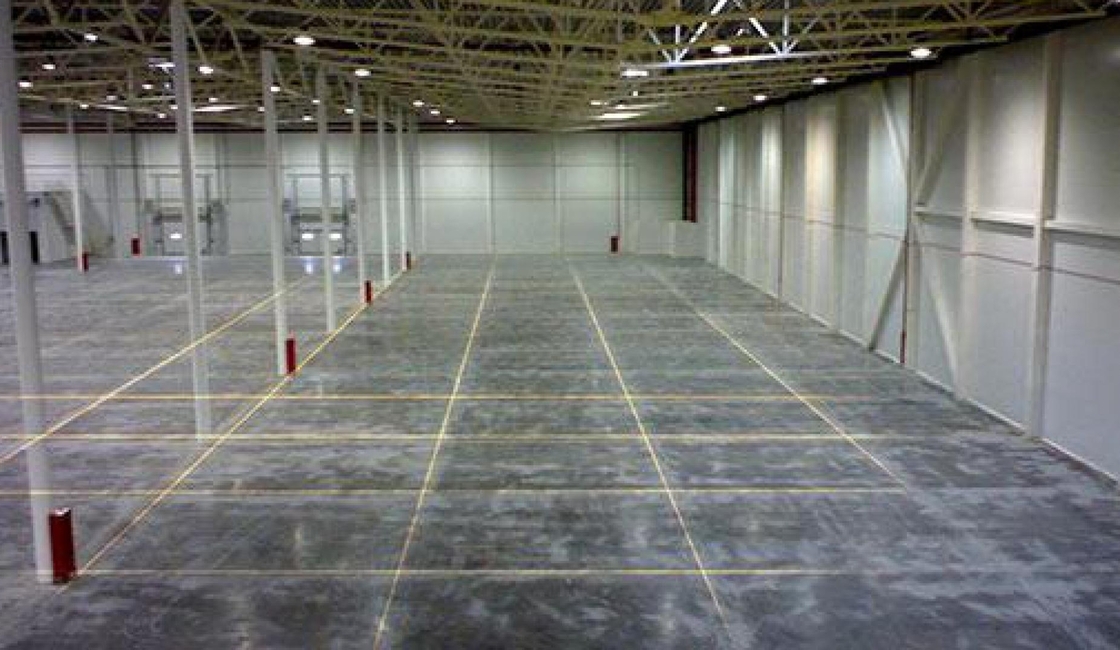
Technology before 1980
Concrete floor slab of 1600m² with 5 meters of saw cuts each = 720 meters of possible jointing problems.
To solve the shrinkage problem, they broke down the floor by sawing. In fact, they created a new big jointing problem. In the case of forklift traffic, saw cuts are always the wrong decision because of missing load transfer and edge protection.
The edges will crumble off due to dynamic changes and wheel impact combined with possible static load vertical movement of the floor slabs. Within a short period of time, the floor will be seriously damaged, unsafe, and even unusable.
1980
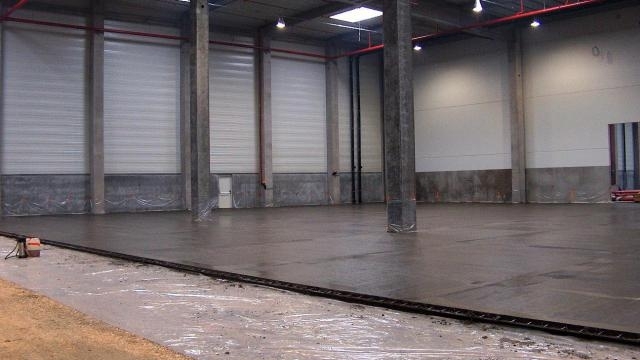
Using expansion joints for shrinkage
Saw cuts are replaced by expansion joints at the edges of the concrete floor slab. The jointing problem is reduced in comparison with saw cuts, but efficacy remains dependent on the intensity of forklift traffic and static loads.
Expansion joints permit free horizontal movement. Crack formation is avoided. However, as the floor shrinks, a gap opening is created. A floor slab of 30x30 metres will create a gap opening from 0.9 up to 1.5 cm. This creates a new problem for forklift traffic.
Load transfer and edge protection: The construction entwines slabs, preventing vertical movement and allowing load transfer. It also functions as a day joint, aiding in the finishing of the floor.
2007
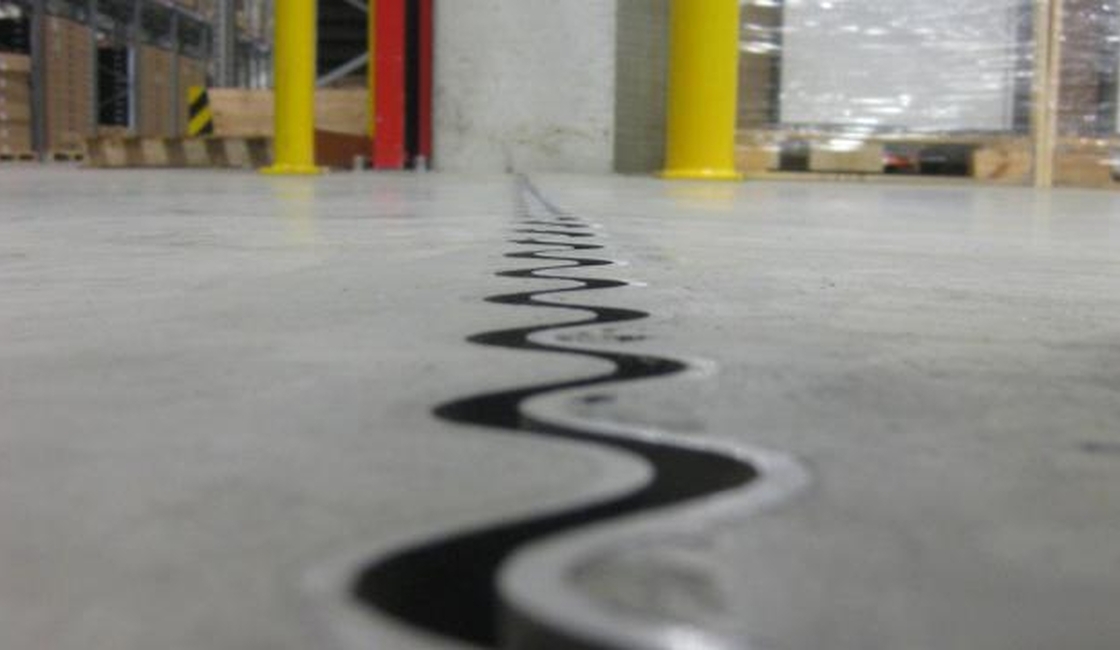
The Sinus Slide® solution
Despite their advantages, traditional expansion joints have one big problem: the joint opening. In every logistic centre, hard forklift wheels fall into this gap, causing damaging ‘shock’ impacts to the floor, joints, equipment, and goods.
With a trend toward smaller, harder wheels and higher speeds, HCJ found a solution by eliminating the cause rather than just reinforcing the joint.
With the Sinus Slide® solution, there is continuous support between wheels and floor. Wheels slide noiselessly and vibration-free from one slab to another, saving thousands of Euro’s annually in maintenance.
2012
The Cosinus floor concept
With the Cosinus Slide® floor concept, the ideal characteristics of the Sinus Slide® solution are preserved but without the traditional dowel and anchoring system.
Load transfer is realised by the floor itself. When taking up the shrinkage process, the Cosinus concept creates vertical columns simultaneously on both sides that slide over each other.
This technique permits horizontal dilatation and realises an optimal connection limiting vertical movement.
2015
Stability verification
Having invented this revolutionary solution, we tackled one of the most dogmatic principles in industrial floor design.
Guidance documents historically claimed the joint was the weakest point and load transfer must be calculated separately.
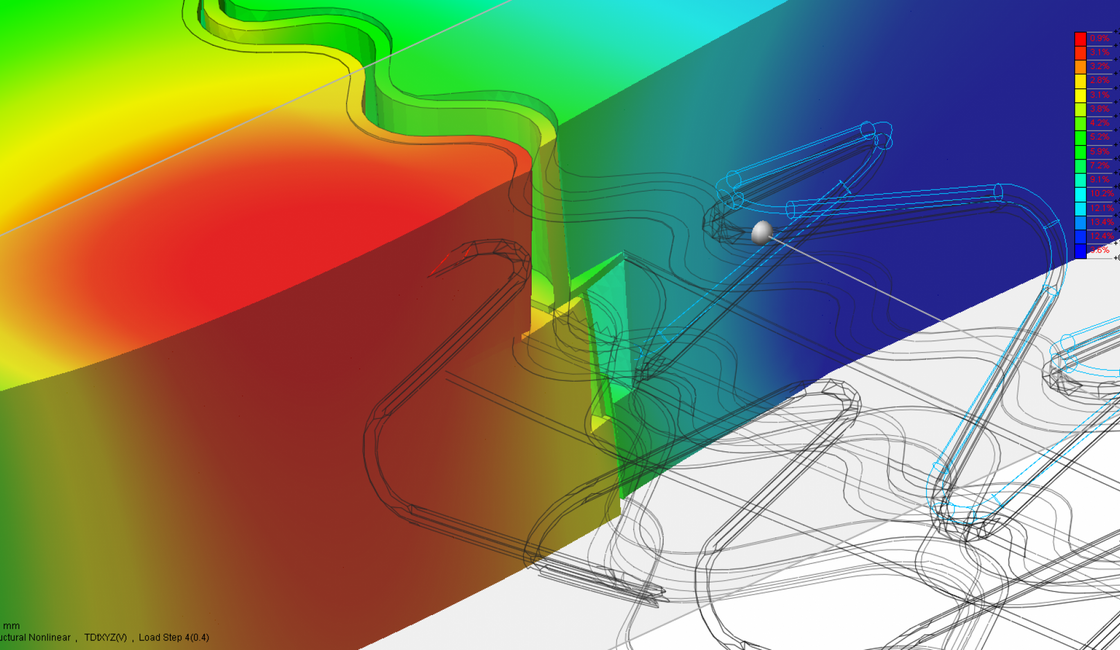
Today, HCJ can prove the load transfer potential of Cosinus slide® profiles with calculations based on non-linear simulations and laboratory testing in different concrete grades and slab thicknesses.
Check load transfer performance with our calculator →
A new era in industrial flooring technology has started.